The $10K Food Truck Mistake
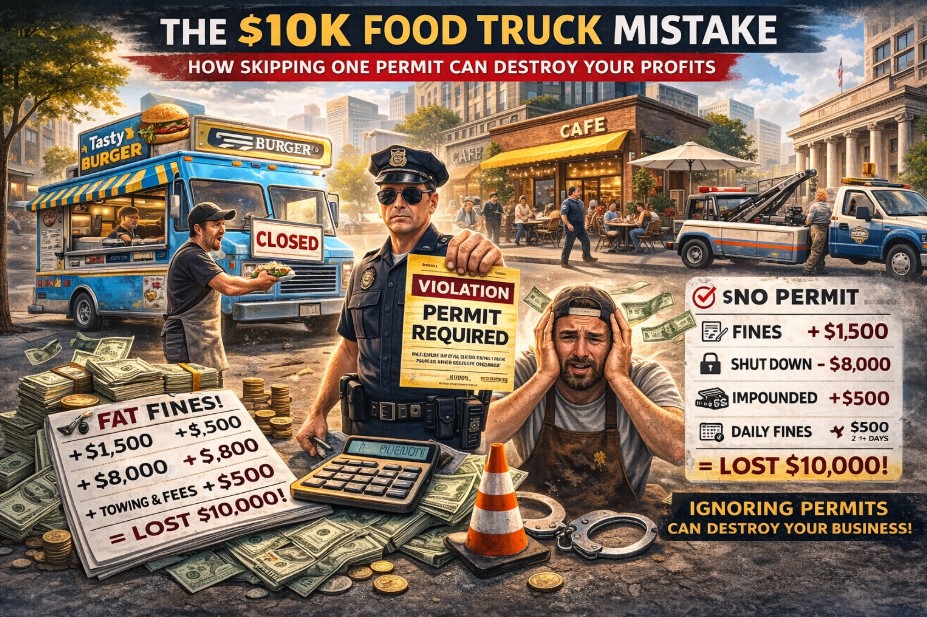
The $10K Food Truck Mistake: How Skipping One Permit Can Destroy Your Profits
Starting a food truck looks simple from the outside.
You buy a truck.
Install equipment.
Design a logo.
Find a busy street.
Start selling.
But there’s one mistake that quietly costs vendors thousands of dollars every year — and many don’t realize it until it’s too late.
It’s not bad food.
It’s not poor marketing.
It’s not even location.
It’s skipping (or misunderstanding) permits.
This is the $10K food truck mistake — and here’s how to avoid it.
Why Food Truck Permits Matter More Than You Think
Food trucks operate in public spaces. That means they are regulated at multiple levels:
- City licensing
- Health department approval
- Fire safety inspection
- Parking and sidewalk permits
- Sales tax registration
- Zoning restrictions
Missing even one requirement can trigger:
- Immediate fines
- Forced shutdown
- Equipment confiscation
- Daily penalties
- Lost revenue
Many new vendors assume they can “test the market” before applying for permits. That assumption is often what leads to the $10,000 mistake.
The Real Cost of Getting Caught
Let’s break down how the financial damage adds up.
1. Immediate Fine
In many cities, operating without proper permits can result in fines ranging from $500 to $2,000 per violation.
2. Lost Sales Days
If you’re shut down for 5–10 days:
- Average daily sales: $1,000
- 7 days closed = $7,000 lost revenue
That’s before expenses.
3. Equipment & Towing Costs
If your truck is towed or impounded:
- Towing fee: $300–$800
- Storage fees per day
- Missed event contracts
4. Event Ban or Location Blacklisting
Some organizers permanently ban non-compliant vendors.
Total damage? Easily $10,000 or more.
The Most Common Permit Mistakes Food Truck Owners Make
Mistake #1: Assuming a Business License Is Enough
A business license allows you to operate as a company.
It does NOT give you the right to park and sell food anywhere.
You often need:
- Mobile vending permit
- Location-based parking approval
- Sidewalk or curb occupancy permit
Without these, you are technically operating illegally — even if you have a registered business.
Mistake #2: Ignoring Zoning Laws
Cities divide areas into zones:
- Commercial
- Residential
- Mixed-use
- Industrial
Some zones prohibit mobile food vending entirely.
Parking in the wrong zone can trigger enforcement immediately.
Mistake #3: Skipping Health Department Approval
Health inspections are mandatory in most jurisdictions.
You may need:
- Commissary kitchen agreement
- Food safety certification
- Water and waste disposal plan
- Temperature control systems
- Handwashing station
Operating without health clearance can result in immediate closure.
Mistake #4: Not Understanding Distance Restrictions
Many cities require food trucks to be:
- 100–300 feet away from brick-and-mortar restaurants
- Certain distance from schools
- Clear from intersections and crosswalks
- Outside fire hydrant zones
Violating distance rules can invalidate your permit on the spot.
Mistake #5: Forgetting Insurance Requirements
Most municipalities require:
- General liability insurance
- Auto insurance (commercial)
- City listed as “additional insured”
Without proper coverage, your application can be denied — or revoked later.
The Hidden Costs Nobody Mentions
Beyond obvious fines, here are the overlooked expenses:
Legal Fees
Hiring a lawyer after a violation can cost thousands.
Reputation Damage
Customers may assume you’re unsafe or unprofessional.
Social Media Impact
Videos of enforcement actions can spread quickly online.
Vendor Network Blacklisting
Event organizers share information.
One violation can follow you for years.
How to Properly Set Up Your Food Truck (The Right Way)
If you want to avoid the $10K mistake, follow this structured approach.
Step 1: Register Your Business
- Choose legal structure (LLC, sole proprietorship, etc.)
- Obtain tax ID
- Register for sales tax
Step 2: Apply for Mobile Vendor License
This authorizes you as a mobile seller.
Step 3: Secure Health Department Approval
Prepare:
- Menu plan
- Food sourcing documentation
- Kitchen layout
- Waste disposal system
- Refrigeration specs
Schedule inspection before opening day.
Step 4: Get Location Approval
This is where many fail.
You may need:
- Parking zone permit
- Sidewalk vending permit
- Event-based authorization
- Private property agreement (if operating in parking lots)
Never assume a busy street corner is automatically allowed.
Step 5: Secure Insurance
Minimum coverage often includes:
- $1 million general liability
- Commercial vehicle coverage
- Workers’ compensation (if hiring staff)
The Smart Vendor Strategy
Experienced food truck operators treat permits as investments, not obstacles.
Here’s how they think differently:
They Budget for Permits Early
Instead of being surprised by fees, they plan for:
- Application fees
- Annual renewal costs
- Inspection charges
They Apply Before Buying the Truck
Some cities cap the number of permits. Buying a truck without confirming permit availability is risky.
They Maintain Good Relationships
Being polite and cooperative with inspectors matters.
Repeat compliance builds trust.
Why Cities Enforce So Strictly
Food trucks operate in shared public spaces.
Cities regulate to ensure:
- Food safety
- Pedestrian access
- Fair competition
- Traffic flow
- Emergency access
Permits are not just bureaucracy — they are control systems to prevent chaos.
Understanding this helps you operate smarter.
Real Example: How One Vendor Lost $12,000 in 30 Days
A vendor launched without final location approval.
Week 1: Good sales.
Week 2: Received citation.
Week 3: Health inspection issue flagged.
Week 4: Forced shutdown for 10 days.
Costs:
- $1,500 fines
- $8,000 lost revenue
- $1,200 towing and storage
- $1,500 legal consultation
Total: Over $12,000.
All because they rushed opening by two weeks.
Final Thoughts: Don’t Let a Shortcut Cost You $10K
The biggest food truck mistake isn’t poor branding or bad recipes.
It’s underestimating regulation.
The excitement of launching often makes new vendors rush the process. But operating legally from day one protects your:
- Investment
- Revenue
- Reputation
- Future expansion
Permits may feel slow and frustrating.
But they are far cheaper than fines, shutdowns, and lost momentum.
Before you fire up that grill and open your service window, make sure your paperwork is stronger than your menu.
Because the $10K food truck mistake is completely avoidable — if you respect the permit process.