Sidewalk Vending Permit in Miami, FL
Understanding the Sidewalk Vending Permit in Miami, FL
Miami, Florida, is known for its vibrant culture, beautiful beaches, and a bustling economy that attracts tourists and residents alike. A significant part of its charm comes from the diverse food and merchandise offered by sidewalks vendors throughout the city. For anyone interested in taking part in this business, understanding the regulations surrounding sidewalk vending is crucial. This article dives deep into the sidewalk vending permit process in Miami, FL, detailing the requirements, benefits, and considerations for aspiring vendors.
What is a Sidewalk Vending Permit?
A sidewalk vending permit is a legal authorization required for individuals or businesses wishing to operate on public sidewalks. In Miami, these permits help regulate vendors to ensure safety, accessibility, and hygiene while also fostering a vibrant atmosphere that contributes to the city’s economic activity. It gives vendors an opportunity to sell food, merchandise, or other services directly to the public, enhancing the overall community experience.
Why Do You Need a Sidewalk Vending Permit?
Sidewalk vending permits are essential for several reasons:
- Legal Compliance: Operating without a permit can lead to fines, penalties, or even the confiscation of goods.
- Safety Regulations: Permits enforce safety standards, protecting both the vendors and their customers.
- Consumer Trust: Being permitted boosts the credibility of vendors, instilling confidence in customers regarding food safety and business practices.
- Economic Contribution: Registered vendors contribute to the local economy by paying taxes and creating jobs.
Types of Sidewalk Vending Permits in Miami
In Miami, vendors mainly require two types of permits depending on their business model:
- Food Vending Permits: Necessary for those selling food and beverages. Food vendors must also comply with health department regulations, which govern the storage, preparation, and selling of food.
- Non-Food Vending Permits: For vendors selling non-food items like clothing, accessories, and crafts. While these permits are less stringent than food permits, they still require adherence to local regulations regarding product safety and display.
Application Process for a Sidewalk Vending Permit
To operate legally as a sidewalk vendor in Miami, applicants must follow a specific procedure to obtain the necessary permits:
Step 1: Gather Required Documents
Before applying, ensure you have all the required documentation:
- A completed application form.
- A state-issued identification (driver’s license, passport, etc.).
- A detailed business plan outlining the nature of goods or services offered.
- Proof of ownership of any equipment or carts used.
- A health department permit (for food vendors).
Step 2: Submit the Application
Applications can typically be submitted online or in person at the designated city office. Make sure to double-check all documentation for completeness and accuracy before submission.
Step 3: Pay the Fees
There will be associated application fees, which might vary based on the type of permit and duration. Ensure payment methods are in accordance with the city’s guidelines.
Step 4: Await Processing
After submission, the process can take several weeks. During this period, the application may be reviewed by various departments, including zoning, health, and safety.
Step 5: Comply with Inspections
Upon approval, vendors must undergo inspections to ensure compliance with health and safety standards. Food vendors, in particular, will face rigorous health inspections from the city’s health department.
Step 6: Obtain Your Permit
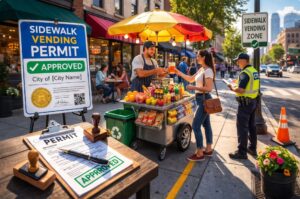
Once you pass all inspections, you will receive your sidewalk vending permit. This document must be displayed prominently at the vending location at all times.
Regulations and Guidelines for Sidewalk Vendors
Success as a sidewalk vendor not only depends on obtaining the necessary permits but also adhering to a series of regulations:
- Location Restrictions: Vendors must operate in designated areas and cannot block sidewalks, driveways, or entranceways. There are specific zones in Miami where sidewalk vending is allowed, and each vendor must know these areas to ensure compliance.
- Hours of Operation: There may be specific hours when vending is allowed. These hours can vary based on location, so checking local ordinances is crucial.
- Display and Equipment: All equipment and displays must be safe, clean, and properly maintained. Vendors should ensure that their setups do not obstruct pedestrian traffic and adhere to height restrictions.
- Health and Sanitation: Food vendors must adhere to local health codes, including maintaining cleanliness and safe food handling practices. Regular inspections will be conducted to ensure compliance.
Challenges Faced by Sidewalk Vendors
While sidewalk vending can offer a fulfilling business opportunity, it’s not without challenges:
- Competition: With many vendors offering similar products, standing out can be a challenge.
- Weather Conditions: Being reliant on outdoor conditions can impact daily sales. Vendors must prepare for rain or extreme heat.
- Regulatory Changes: Changes in local laws or regulations can affect vendors’ operations. Staying informed about any adjustments is vital.
- Health Regulations: Food vendors face strict health regulations, often requiring significant investment in equipment and training.
Benefits of Sidewalk Vending
Despite the challenges, there are numerous benefits associated with sidewalk vending:
- Cost-Effective: Starting a vending business often requires less capital compared to traditional brick-and-mortar operations.
- Flexibility: Vendors can adapt their offerings based on demand, season, or customer feedback.
- Community Engagement: Sidewalk vending allows vendors to interact with the community, fostering relationships and loyalty among customers.
- Entrepreneurial Experience: It offers a prime opportunity to learn about business management, sales strategies, and customer service.
Success Stories of Sidewalk Vendors in Miami
There are numerous inspiring success stories of vendors who started small and expanded their businesses in Miami. From food trucks that started as sidewalk carts to vibrant stands offering unique crafts, many vendors have transformed their passion into thriving enterprises.
Conclusion
Embracing the sidewalk vending culture can be a rewarding endeavor for those interested in business and community engagement in Miami, FL. However, it’s vital to navigate the permitting process carefully, understand regulations, and continuously adapt to the challenges of this unique business landscape. By obtaining the necessary sidewalk vending permit and adhering to local guidelines, aspiring vendors can contribute positively to the economic vibrancy of Miami while enjoying the benefits of operating their own business on the bustling sidewalks of this beautiful city.
As a prospective vendor, staying informed and connected with local vendor communities can provide invaluable insights and support. Whether you envision serving delicious bites or showcasing creative crafts, Miami’s sidewalks are waiting for your unique offerings.