
The Sidewalk Permit Nobody Explains
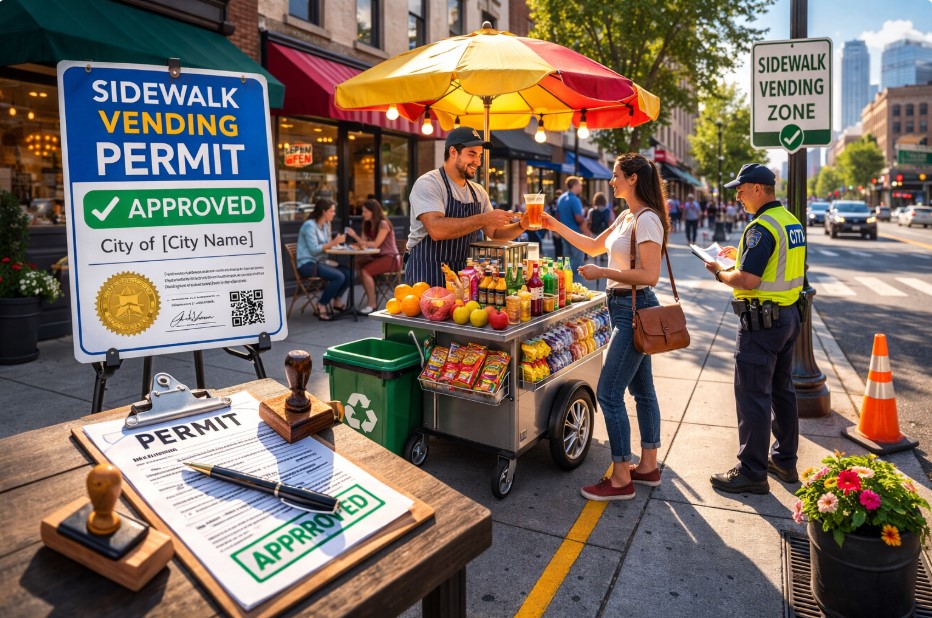
A sidewalk permit is official authorization from a local municipality that allows you to temporarily or permanently use public sidewalk space for business or operational purposes.
Important:
Even if the sidewalk is directly in front of your store, you do not own it. It is public right-of-way.
Cities regulate sidewalk usage to ensure:
- Safe pedestrian movement
- Accessibility for disabled individuals
- Emergency access
- Urban order and fairness
- Liability control
Different cities may call it different names:
- Encroachment Permit
- Right-of-Way Permit
- Street Occupancy Permit
- Sidewalk Café Permit
But they all serve the same purpose: structured use of public space.
Who Actually Needs One?
Most people assume only restaurants need sidewalk permits. That’s incorrect.
Here are the most common users:
1. Restaurants & Cafés
Outdoor tables, chairs, umbrellas, planters, heaters.
2. Retail Stores
Display racks, sale bins, mannequins, promotional stands.
3. Construction Companies
Scaffolding, dumpsters, material storage, sidewalk closures.
4. Food Trucks & Mobile Vendors
Parking and operating in specific curbside zones.
5. Event Organizers
Temporary booths, charity tables, pop-ups, sidewalk sales.
If your activity physically occupies public walkway space — you likely need approval.
Why Cities Care So Much
From a business owner’s perspective, a few chairs may feel harmless. From a city’s perspective, sidewalks are critical infrastructure.
Pedestrian Safety
Sidewalks must remain clear enough for:
- Wheelchairs
- Strollers
- Seniors
- High foot traffic
Blocking or narrowing walkways increases accident risk.
Accessibility Compliance
Many countries enforce disability access regulations. Cities must ensure public paths remain usable for all citizens.
Emergency Services
Fire departments and ambulances require clear access routes. Unregulated obstructions can delay emergency response.
Legal Liability
If someone trips over your outdoor display, who is responsible? The permit process clarifies insurance coverage and responsibility.
The Types of Sidewalk Permits (Explained Clearly)
1. Outdoor Dining Permit
Restaurants must usually submit:
- A layout drawing with measurements
- Proof of liability insurance
- Pedestrian clearance details
- Furniture specifications
- Barrier or enclosure details
Cities often require a minimum clear pathway (commonly 4–6 feet).
Approval may be seasonal or annual.
2. Construction Sidewalk Occupancy Permit
Required when:
- Installing scaffolding
- Placing dumpsters
- Blocking sections for repair
- Performing façade work
This often includes:
- Safety barriers
- Reflective markings
- Night lighting
- Time limits
- Inspection approvals
Operating without this can lead to stop-work orders immediately.
3. Mobile Vendor / Food Truck Permit
Food trucks usually require:
- Vendor license
- Location-based sidewalk or curb permit
- Health department approval
- Waste disposal plan
Cities regulate:
- Distance from restaurants
- Distance from schools
- Operating hours
- Noise limits
Failure to comply can result in immediate removal.
4. Temporary Event Permit
Needed for:
- Sidewalk sales
- Promotional activations
- Charity tables
- Street marketing
- Amplified sound setups
Even short-term usage may require authorization.
The Hidden Requirements Nobody Mentions
Many applications get rejected due to overlooked details.
Insurance Certificate
Cities often require general liability insurance naming the municipality as “additional insured.”
Without this, your application may not move forward.
Exact Measurements
Guesswork is not accepted. You must provide precise dimensions of:
- Sidewalk width
- Occupied space
- Remaining pedestrian clearance
Zoning Compliance
Not all commercial zones allow sidewalk usage. Some districts — especially historic or high-traffic areas — have stricter rules.
Renewals
Many permits expire annually. Forgetting renewal means automatic non-compliance.
What Happens If You Ignore It?
This is where business owners underestimate risk.
Operating without a sidewalk permit may result in:
- Immediate fines
- Daily penalty charges
- Removal orders
- Confiscation of furniture or equipment
- License suspension
- Increased inspections
- Legal liability if accidents occur
And once flagged, your location may receive ongoing scrutiny.
The Financial Side Most People Forget
When planning a business, owners calculate:
- Rent
- Utilities
- Staff salaries
- Inventory
But they often forget:
- Permit fees
- Per-square-foot charges
- Security deposits
- Inspection fees
- Insurance premium increases
In busy commercial areas, sidewalk permits can cost significant amounts annually.
However — they can also increase revenue dramatically through:
- Extra seating capacity
- Increased visibility
- Stronger street presence
- Higher walk-in traffic
The permit becomes an investment, not just a cost.
How to Get Approved Faster
Here’s what professionals do differently:
1. Submit Professional Layout Drawings
Even simple CAD-based diagrams look more credible and reduce delays.
2. Leave Extra Clearance
Providing more pedestrian space than required improves approval chances.
3. Use Stable, High-Quality Furniture
Cities reject flimsy or unsafe setups.
4. Communicate with Neighbors
Complaints can delay approvals. Good relationships help.
5. Apply Early
Some cities take weeks for processing, especially during peak seasons.
Why Rules Differ Everywhere
Sidewalk regulations are hyper-local.
Factors influencing rules:
- Pedestrian density
- Tourism volume
- Climate
- Political leadership
- Historical district protections
- Urban planning strategy
Advice from another city may not apply to yours.
Always verify locally.
The Bigger Urban Picture
Sidewalk permits reflect a balance between:
Private business expansion
and
Public space protection
Cities want:
- Vibrant streets
- Safe walkways
- Organized commercial activity
Businesses want:
- More revenue
- Greater exposure
- Competitive advantage
The sidewalk permit is where those interests meet.
It’s not just paperwork — it’s structured urban negotiation.
When You Might Not Need One
In some locations, permits may not be required for:
- Temporary loading under strict time limits
- Small removable signage
- City-sponsored events
But definitions of “temporary” can be very strict.
Never assume. Always confirm.
The Future of Sidewalk Permitting
Urban planning trends show:
- Online digital applications
- Seasonal outdoor dining programs
- Smart city monitoring
- Data-driven allocation of public space
- Stricter enforcement in dense areas
As cities become more pedestrian-focused, regulation of sidewalk use will likely become more structured — not less.
Final Thoughts
The sidewalk permit is one of the most misunderstood regulatory requirements in business.
It feels small — until it isn’t.
Ignore it, and you risk fines, shutdowns, and long-term compliance problems.
Understand it, and you gain:
- Additional revenue space
- Stronger street visibility
- Legal confidence
- Competitive advantage
The sidewalk may belong to the public — but with the right permit, it can become one of the most powerful extensions of your business.