Food Truck Permit in New York City, Ny
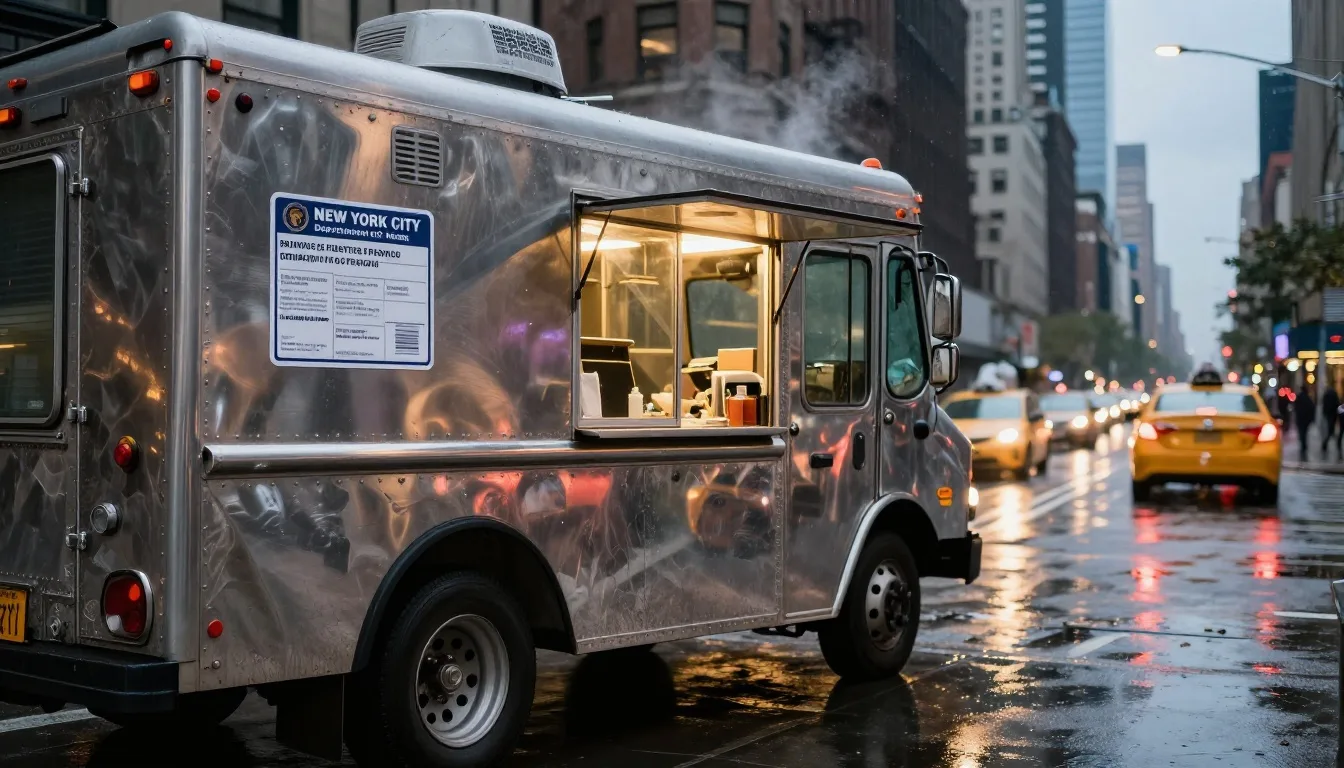
Navigating the Maze: Your Definitive Guide to Securing a Food Truck Permit in New York City
Imagine rolling through the heart of Manhattan, your food truck gleaming under the city lights. The smell of fresh tacos or gourmet burgers pulls in lines of eager customers. You picture quick setup in busy spots and steady cash flow from foot traffic. Street food in NYC sounds like a dream job with less hassle than a full restaurant. But the rules hit hard. Permits, inspections, and caps on licenses can stall your plans fast.
Launching a food truck here means tackling a web of red tape. You need approvals from city agencies, health checks, and vehicle standards. This guide breaks it all down. It covers steps, costs, and tips to get your NYC food truck permit without the headaches. By the end, you’ll know how to move from idea to legal operation.
Section 1: Understanding the Core Requirements: Licenses vs. Permits
New vendors often mix up licenses and permits. A license lets you handle food as a person. A permit ties to your truck and lets you sell on streets. Both come from different city offices. Get them right to avoid shutdowns.
Mobile Food Vending License (MFVL) for the Operator
Every person who touches food needs this license. The Department of Consumer and Worker Protection, or DCWP, handles it. You apply as an individual, not for the business.
First, take a short food safety course. It’s about four hours and costs around $20. The class covers basics like handwashing and safe storage. After that, submit your application online through the DCWP site. Fees run $25 to $50, depending on your status. Renew it every two years to keep vending.
This license proves you’re trained. Without it, you can’t work on any truck. Think of it as your personal ticket to the kitchen wheels.
Mobile Food Vending Permit (MFVP) for the Truck
This one sticks to the vehicle. It’s what lets your truck park and sell food. NYC limits these permits tightly. Only about 3,000 exist citywide, and new ones rarely open up.
Right now, in 2026, a long waitlist blocks fresh applicants. Transfers from old owners cost big—up to $50,000 or more on the market. Check the DCWP site for lotteries or openings. They happen once a year if spots free up.
The cap started in the 1980s to control crowding. It keeps streets from turning into total chaos. If you buy a used permit, verify it’s active. Fakes waste your money.
Food Protection Certificate
At least one crew member must hold this cert. The Department of Health and Mental Hygiene, DOHMH, runs the program. It’s for the boss or lead cook.
You finish a 15-hour course on health rules. Topics include pest control and cross-contamination. Cost is $15, and it lasts five years. Apply online or at a DOHMH office.
This shows your team knows sanitation. Inspectors check for it during visits. Skip it, and your truck fails the health review.
Section 2: The Vehicle and Commissary Requirements
Your truck must meet strict build standards. Plus, you need a base kitchen for prep. These rules come before any permit approval. Skip them, and you’re stuck.
Vehicle Inspection and Compliance
The truck counts as a mini-restaurant on wheels. NYC Fire Department, or FDNY, checks for safety. They look at propane tanks, gas lines, and fire extinguishers.
Get commercial auto insurance first— at least $100,000 bodily injury per person. Add general liability up to $1 million. Then schedule the FDNY exam. It costs $200 and covers suppression systems.
Trucks need smooth floors and easy-to-clean walls. No rust or leaks allowed. Pass this, and you get a sticker. Fail, and fix issues quick.
Commissary Agreement Documentation
Every truck requires a commissary. It’s a licensed spot for cleaning, food storage, and dumping waste. You can’t do it at home or on the street.
Pick a place with DOHMH approval. Look for contracts that spell out 24-hour access and waste pickup proof. Fees start at $200 monthly. Sign and notarize the deal.
Commissaries keep streets clean. They store your gear overnight too. Without one, DOHMH rejects your plans.
What to Look for in a Commissary Contract
- Clear hours: Need access before dawn shifts.
- Waste services: Daily removal to avoid fines.
- Storage space: Enough for pots, fridges, and supplies.
- Proof of license: Ask for the DOHMH number.
These details save headaches later.
Health Department Plan Review (DOHMH)
Submit your setup plans early. Include your menu, equipment list, and layout drawings. DOHMH reviews for sanitation risks.
The fee is $300. They check if your sink setup works for handwashing. Or if vents pull smoke right. Approval takes 4-6 weeks.
Once greenlit, book the on-site inspection. Bring all docs. This step clears health hurdles.
Section 3: The Application Process: Step-by-Step Submission
Paperwork feels endless, but follow the order. Start with personal licenses. Then vehicle permits. End with inspections. Delays happen at peaks, so plan ahead.
Applying for the Mobile Food Vending License (Individual)
Head to the DCWP online portal. Fill out the form with your ID and course proof. Upload a photo and pay the fee.
If online glitches, visit their office in Queens. Processing takes 2-4 weeks. You’ll get a card to carry always.
Track your status online. It speeds things up.
Applying for the Mobile Food Vending Permit (Vehicle/Quota System)
New permits? Join the waitlist via DCWP. It moves slow—years sometimes. Better bet: Buy from a seller with an active one.
Transfers need DCWP approval. Submit both parties’ info and pay $100 fee. No windows set now, but check for 2026 updates.
Recent laws eased some caps in parks. But streets stay tight. Impact? More spots in green areas, less in cores.
Scheduling Required Inspections
First, DOHMH health check. Book after plan review. They test water lines and storage.
Then FDNY safety scan. Coordinate dates to avoid back-and-forth. Both cost extra if you reschedule.
Pass rates hover at 70%. Prep well to join them.
Section 4: Navigating Location Rules and Zoning Restrictions
Permits get you rolling, but spots decide success. NYC maps out no-go zones. Know them to dodge tickets.
Restricted Zones and Distance Requirements
Stay 20 feet from building doors. Keep clear of subway stairs by 10 feet. Schools and parks have extra buffers—200 feet away.
Enforcement hits hard in Midtown. Trucks near Times Square face quick tows. Tourist spots like Central Park edges draw crowds but cops too.
Use the DOT app for maps. It shows safe parks daily.
Metered Parking and Time Limits
Pay the meter like any car. Two-hour max in most spots. Vending doesn’t pause the clock.
Get a DOT vending permit for metered areas—$50 yearly. Ignore it, and fines stack.
Time your stops. Rotate spots to build regulars without violations.
Sidewalk Clearance and Accessibility
Leave three feet clear for walkers. Propane tanks stay inside or chained safe. Generators can’t block paths.
DOHMH and DOT team up on checks. Wheelchair access matters too. Narrow sidewalks mean no setup.
Follow this, and you keep customers happy and flowing.
Section 5: Ongoing Compliance and Potential Penalties
Get your papers, but stay on top. Renewals and checks keep you legal. Slip up, and costs add fast.
Permit Renewal Cycles and Documentation Updates
MFVL renews every two years—$25 fee. MFVP lasts one year, $200 to refresh. Update insurance yearly too.
Commissary contracts? Renew as needed. Report changes to DCWP within 10 days.
Set calendar alerts. Miss one, and your truck sits idle.
Understanding Violations and Fines
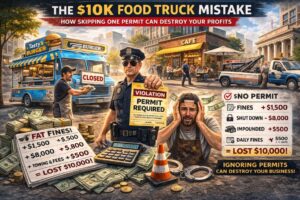
Common slips: No visible permit—$250 fine. Wrong waste dump—up to $1,000. Parking in bans—tow plus $500.
Fines double for repeats. Pay or fight at hearings.
How to Contest a Citation
- Gather proof: Photos of your setup.
- File appeal within 30 days at DOHMH.
- Show compliance steps you took.
Wins happen with good evidence.
Commissary Checks and Health Grade Display
DOHMH inspects commissaries quarterly. Your truck gets surprise visits. Grades run A for top, down to C.
Post the latest grade where all see it. A’s boost business; C’s hurt sales.
Aim high with daily cleans. It pays off.
Conclusion: From Application to Asphalt
You need nods from three big players: DCWP for licenses, DOHMH for health and vehicle, FDNY for safety. Each layer builds your legal base.
The real snag? That MFVP with its tight cap. Hunt transfers or wait smart.
Stick to these steps, and your food truck thrives in NYC’s buzz. The streets wait—get legal, then serve up success. Start today with your DCWP application.