Food Truck Permit in Phoenix, AZ
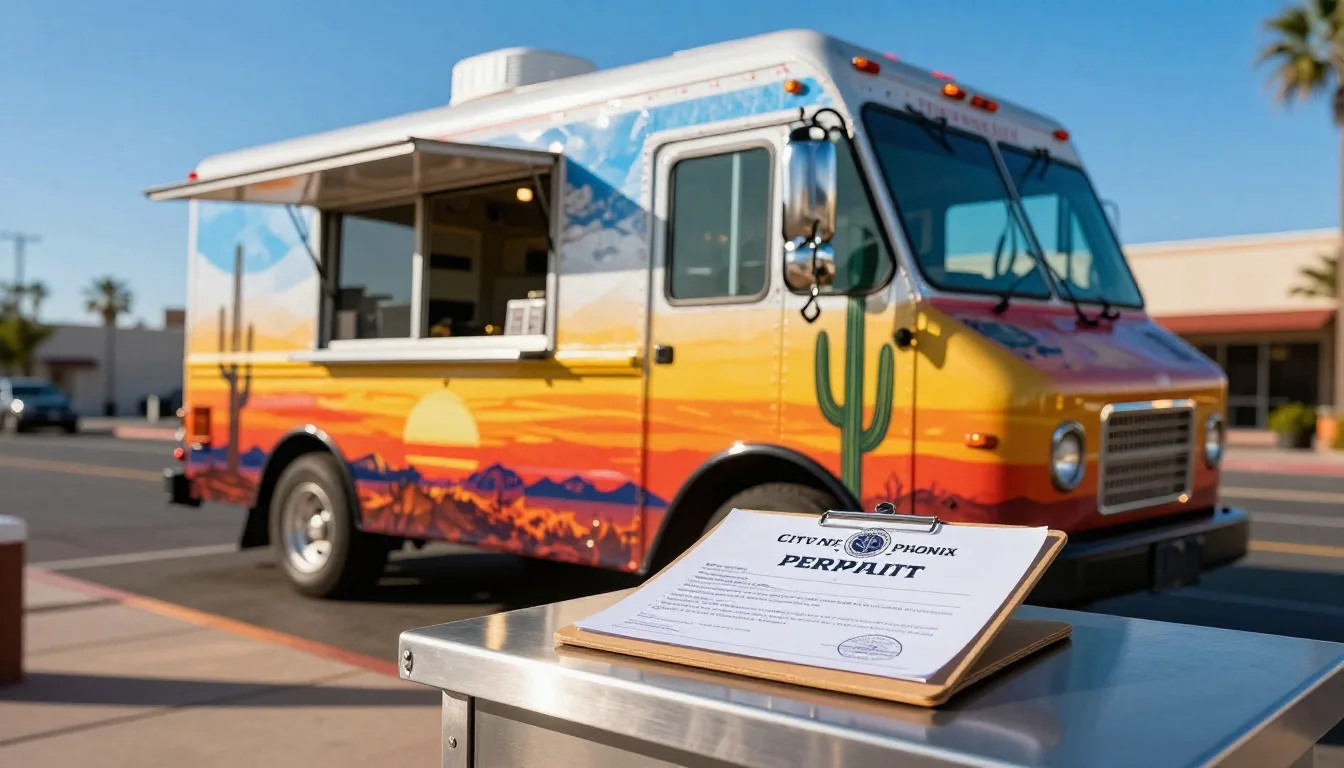
Navigating the Maze: Your Definitive Guide to Securing a Food Truck Permit in Phoenix, AZ
The mobile food scene in Phoenix is booming. Think sizzling tacos and fresh salads rolling through the streets of the Valley of the Sun. This setup draws crowds and cash, but rules can trip you up fast. You dream of slinging meals from your truck, yet permits stand in the way.
This guide walks you through every step to get your food truck permit in Phoenix, AZ. You’ll learn the legal path from start to finish. Stay compliant right away and hit the roads serving up success.
Section 1: Understanding the Phoenix Mobile Food Vending Landscape
Phoenix sets clear rules for food trucks. These keep food safe and streets orderly. Before you apply for anything, grasp the basics.
Defining Mobile Food Vending in Maricopa County
Mobile food vending means cooking or selling from a vehicle. In Maricopa County, you need a base kitchen called a commissary. Some spots, like downtown Phoenix, ban trucks within 500 feet of schools or parks. City codes split permits into types, such as pushcarts or full trucks. Know your category to pick the right one.
Zones matter too. Restricted areas include busy cores where foot traffic mixes with fixed eateries. Check the county map online to spot open zones. This step saves headaches later.
Essential Pre-Permit Due Diligence
Start with your business setup. Register as a sole proprietor or LLC through the Arizona Corporation Commission. It’s quick online and costs about $50. Then grab an EIN from the IRS—it’s free and takes minutes on their site.
Why bother first? Without this, agencies won’t process your apps. Think of it as your business ID card. Double-check your name and address match everywhere.
Key Regulatory Bodies Involved
Three main groups oversee food trucks in Phoenix. The Phoenix Planning & Development Department handles zoning. Maricopa County Environmental Services Department, or MCESD, checks health standards. The Phoenix Fire Department ensures fire safety.
Each plays a role in your permit puzzle. Contact them early for forms. Their websites list contacts and updates as of February 2026.
Section 2: Health and Safety Licensing: The MCESD Approval Process
Health rules top the list for food trucks. MCESD leads this part. They make sure your setup keeps food fresh and customers safe. Skip this, and you can’t operate.
Commissary Agreement Verification
Every food truck needs a commissary. This is a licensed kitchen for prep and storage. Find one approved by MCESD—list them on the county site. Sign a contract showing access hours and services.
Inspectors check if it’s clean and close by. Aim for spots within 20 miles of Phoenix for easy trips. Keep logs of your visits to prove use. This builds trust with regulators.
Mobile Food Facility Plan Review Application
Submit plans to MCESD for review. Include equipment lists, like fridges and stoves. Add plumbing drawings and grease trap details. Project your menu too—think burgers or salads.
Use their checklist from the website. It covers sinks, ventilation, and pest control. Fees run $300 to $500, depending on truck size. Reviews take 10-15 business days.
The Final Health Inspection and Permit Issuance
Once plans pass, schedule an inspection. Inspectors eye temperature logs for coolers under 41°F. They test handwashing stations and watch for germ spread. Fix issues on the spot if you can.
Pass this, and get your Food Establishment Permit in 1-2 weeks. It lasts a year. Renew before it expires to avoid fines up to $1,000.
Section 3: Business Licensing and Zoning Compliance in Phoenix
Local rules let your truck park and sell legally. Phoenix demands a business license. Zoning picks where you can go. Fire safety ties it all together.
Obtaining the Phoenix Business License
Apply for a Mobile Food Preparation Unit license at City Hall. Show your MCESD permit and business docs. Fees start at $250 yearly. Processing takes 5-10 days.
This license covers sales tax collection. Link it to your EIN for smooth tracking. New in 2026: Online apps speed things up.
Navigating Zoning and Location Restrictions
Zoning laws limit spots. Stay 300 feet from brick-and-mortar spots in some areas. Corners need 50-foot buffers for safety. Read the Phoenix Zoning Ordinance online, section 622.
For example, avoid Old Town Scottsdale fringes—trucks there face extra scrutiny. Use the city’s GIS map to scout legal parks. Get a variance if needed, but it adds time.
Fire Safety Inspection and Permit
The Fire Department checks your truck. Follow NFPA codes for extinguishers. Ensure hood systems have Ansul tags. Store propane tanks outside, secured.
Inspections cost $100 and happen after health approval. Pass rate hits 85% on first try if prepped. Their permit renews every two years.
Section 4: Vehicle Documentation and Operational Permits
Your truck must roll legally. Register it right and insure heavy. Gas systems need stamps too. Tax permits handle sales.
Vehicle Registration and Insurance Requirements
Head to Arizona MVD for commercial tags. Weigh your truck over 10,000 pounds? Get a full inspection. Fees vary by size, around $200 yearly.
Insurance covers at least $500,000 liability for food vendors. Shop quotes from local agents. Proof goes with your city license app.
Propane and Gas System Certification
Hire a certified tech for LP gas checks. They sign off on lines and valves. Link this to fire permit needs.
Tests cost $150-300. Do it yearly. Safe systems prevent shutdowns—last year, 20 trucks got cited for leaks.
Seller’s Permit for Transaction Privilege Tax (TPT)
Get a TPT license from Arizona Department of Revenue. It’s free and online. Collect 8.6% sales tax on meals.
File returns monthly or quarterly. Track sales with software. Miss this, and fines stack up fast—up to 15% penalties.
Section 5: Operational Best Practices and Ongoing Compliance
Permits get you started. Now keep things running smooth. Renew on time and handle waste right. Events need extras.
Food Truck Permit Renewal Schedules and Fees
Health permits renew yearly for $200. City licenses match that at $250. Fire checks every two years, $100.
Set calendar alerts. Lapsed ones mean $500 fines per day. In Phoenix, over 100 vendors renewed late last year.
Managing Waste and Grease Disposal
Dump wastewater only at commissaries. Grease goes to renderers—keep manifests. No street drains.
Set a weekly schedule. Use apps to log drops. This meets MCESD rules and cuts pollution tickets.
Vending Agreements and Special Event Permits
For private lots, sign owner agreements. Events like festivals need temp permits—$50 each from the city.
Apply 30 days ahead. They last 1-7 days. Last February’s Phoenix Food Truck Fest saw 200 trucks with these.
Conclusion: Launching Successfully in the Phoenix Food Scene
Securing a food truck permit in Phoenix boils down to three key steps. First, nail the MCESD plan review for health nods. Second, check city zoning to find safe spots. Third, clear fire safety for worry-free ops.
You’ve got the roadmap now. Keep records tight and chat with departments often. Your truck awaits—fire it up and join the tasty rush in the Valley. Start today for tomorrow’s first sale.